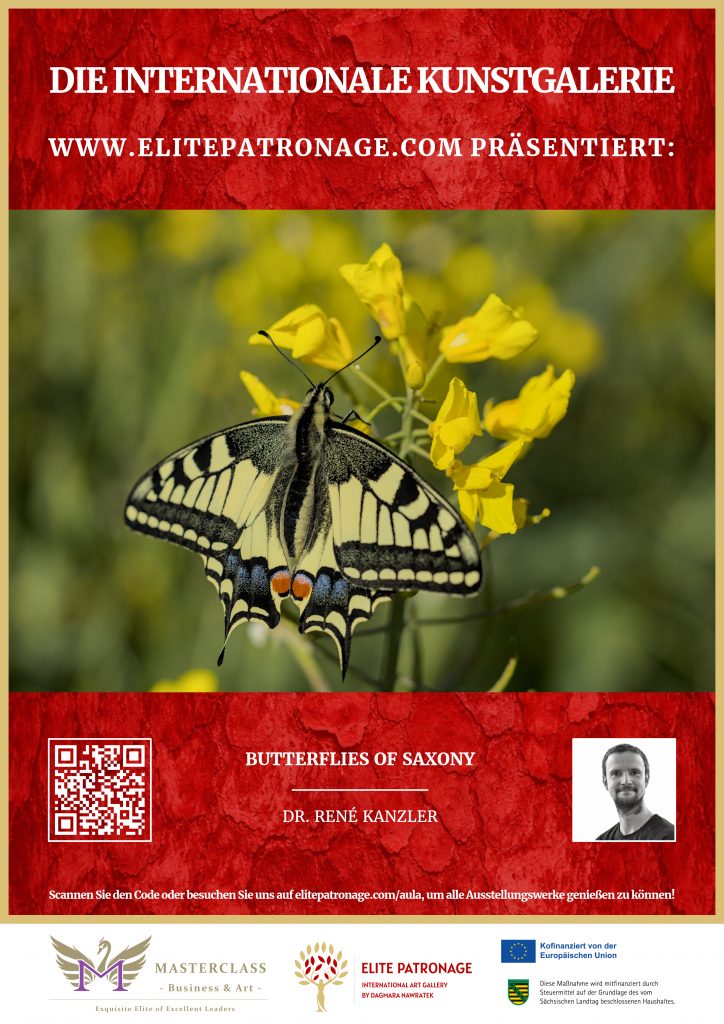
Dr. René Kanzler: Butterflies – Artworks of the Nature
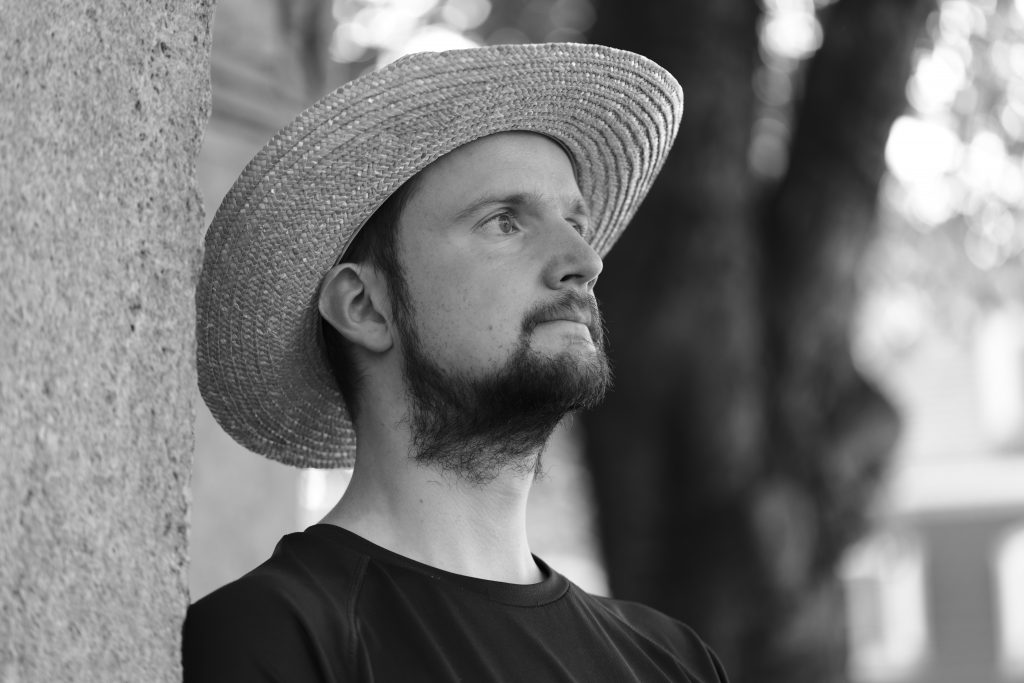
I learned a lot about the behavior of butterflies and with this knowledge, I was even more motivated to spend more time in the nature of North Saxony and to always create special photos. You have to be alert and take your chance if you want to photograph butterflies. It often has a lot to do with luck. I do not know beforehand whether I will see a special butterfly today. Even if I see it, will it sit on a flower today in such a way that I can photograph it? All in all, it comes down to calm, patience, an open mind and a connection between yourself and the location – confess photography enthusiast Dr. René Kanzler, whose virtual exhibition can be admired at the International Art Gallery “Elite Patronage” founded in Torgau.
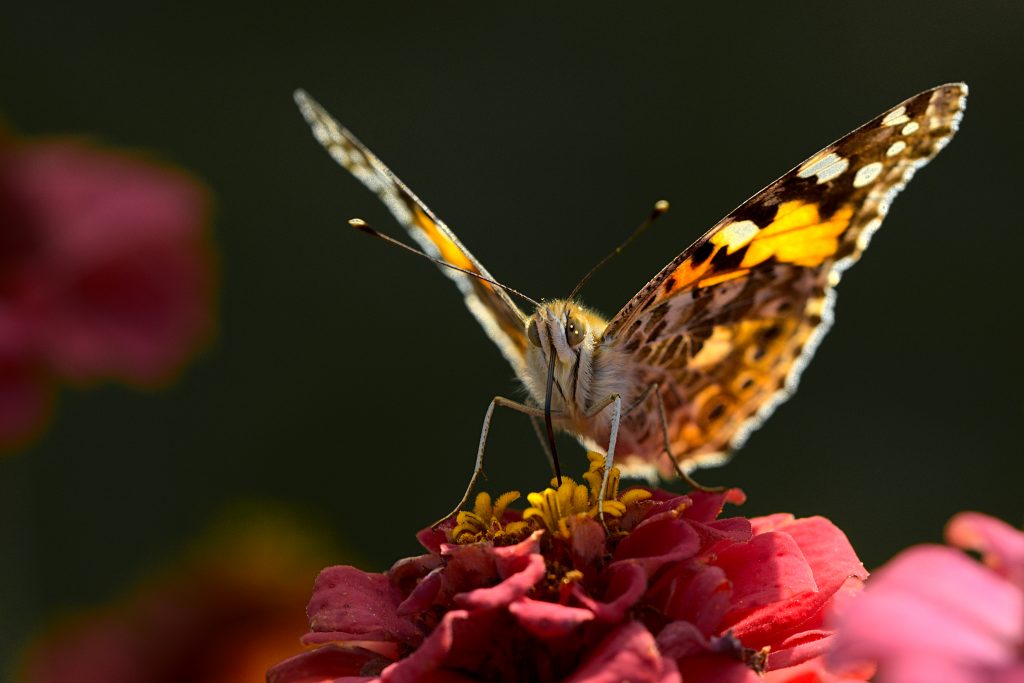
Dagmara Nawratek: The photographs shown in the International Art Gallery “Elite Patronage” were taken in the North Saxony region. What about this region fascinated you so much that you chose it for your photography trips?
René Kanzler: Northern Saxony was where I lived and worked for many years. In my free time, I loved exploring nature along the Elbe River. From the very beginning, I was fascinated by the endless expanses of the Elbe River, floodplains, the lonely, deserted nature, the grasses, meadows, flowers, trees, shrubs, forests and, of course, the Elbe River itself. Here I felt something like artistic freedom and was always inspired to create new photos – or sometimes just to enjoy nature on my bike. Step by step, I learned a lot about the behavior of insects and birds, for example. With this knowledge, I was even more motivated to spend more time in the nature of North Saxony and to always take special
photos.
Please tell us the secret of how a nature photographer prepares for a photo trip in search of beauty hidden between the blades of grass.
I think the essential thing is to ask yourself beforehand what you want to photograph. For example, if I want to photograph birds, butterflies or a landscape, then I need different lenses with different characteristics and focal lengths. A lens then determines how you see and photograph your surroundings during a photo trip. If you have too many lenses with you, you will not focus properly. You end up constantly changing lenses, missing opportunities for a successful photo and not seeing the unique things that surround you. Otherwise, it is crucial to arrive at the location where you want to take photos. This means you should first take time to explore the place, learn to understand it and enjoy it. For instance, I always want to have a bit of peace and quiet after arriving, then I want to know what can be seen today and in what light. Then, I usually wait a little longer to let the place have an effect on me until I feel a resonance, so to speak, between myself and the place inside. If this is the case, then ideas for photos will emerge. Beyond that, however, you should simply let the location in question work its magic on you and be patient. In nature photography, beauty often comes after a long wait. Then you must be alert and take your chance. It often has a lot to do with luck. I do not know beforehand whether I will see a special butterfly today. Even if I see it, will it sit on a flower today in such a way that I can photograph it? Often you see everything other than what you would like to see. It is worth keeping an open mind and to see and understand that beauty is not only reflected in the desired photo object, but in many other things and moments. All in all, it comes down to calm, patience, an open mind and a connection between yourself and the location.
What makes butterfly photography unique and what are the challenges associated with it?
Butterflies are incredibly versatile. They have all kinds of colors and shapes, are graceful, playful, lively and each one is a work of art made by nature. You can always photograph the same species of butterfly and still create new and unique pictures, because you can never predict how and where you will encounter a butterfly, how it will behave and whether you will be able to capture a particular moment photographically. There are people who photograph butterflies in the early hours of the morning because butterflies are not very active due to the cold. Then it is quite easy to photograph them. But I find that boring. It is more challenging for me when I catch active butterflies, because then I can show them sunbathing with their wings open or looking for food on a flower, for example. The important thing is not to frighten them, to let them be and to give them a sense of security. That does not always work. You must approach them, and you should also give them their space if you realize that they are constantly fleeing from you. You need a lot of patience, good eyes, luck and also some body tension to be able to photograph the butterflies from different perspectives. It is not uncommon for me to have sore muscles the next day from all the squatting movements, for instance. After all, you should know your photographic craft. You should know which lens to use for which purpose, which settings to make in the camera and which perspective to choose. These kinds of manual skills need to be second nature, because a butterfly usually does not wait for you. When you see it, you must act carefully but quickly. If you think about which aperture to set first, you can easily miss photographic opportunities.
Which photo are you most proud of? Which butterfly did you get the most satisfaction from capturing?
In the end, of course, I am proud of every photo, as there is a lot of work behind each one. But I am most pleased with the photo of a mourning cloak. The photo can be found on the second level, second from the left. It shows a butterfly with brown wings outlined in yellow. I have only seen this butterfly once in my life and had to cycle quite a few meters uphill and over quite a long distance to find it. But the fact that I found it and was able to photograph it makes me very proud.
What species of butterflies are still on your dream list?
I would have only replied to the question that I would like to photograph a swallowtail again. I have not seen this beautiful and outstanding butterfly for years. But in preparation for the exhibition, I was very lucky to finally see one again. As if it could not have been any better, it even sat on rape blossoms, resulting in one of the most beautiful butterfly photos I have ever taken. Now all I need is an orange tip. I see it quite often in spring, but unfortunately, I have never been able to photograph it as it is always very active and flies quickly from place to place. But its white wings with orange tips are just waiting to finally be photographed.
Thanks to this eye-catching exhibition, photography enthusiasts from all over the world can admire the beauty of nature of North Saxony. But it is not only the promotion of the region that is the advantage of the online exhibition. What other benefits can a photographer gain by deciding to show their work in a virtual space?
The virtual art gallery “Elite Patronage” under the media patronage of “Masterclass. Business & Art” magazine makes it possible for me to show my photos worldwide in an extremely appealing ambience. At the same time, you have the feeling of entering a real gallery and visiting a real exhibition. Anyone can do this anytime and anywhere. This can attract many visitors who, in the best case, will then send me their feedback or want to start collaborations with me. As a marketing tool, this virtual gallery is unbeatable. At the same time, it enables me to convey my view of the world, my perception of beauty and the scenes and special features of our natural world, perhaps motivating visitors to become more involved in the interests of art and nature.
Not only exhibitions, but also theatre premieres, opera, ballet and many other cultural events have been moved online during the coronavirus pandemic, which has been met with great enthusiasm by art lovers. The need for this type of online cultural events is still there, as it allows, especially older and sick people, to have regular contact with art. What else makes virtual art galleries so unique and popular?
The good thing about digitization and the associated digital exhibitions is that artworks can be accessed worldwide by anyone with an internet connection. Art and culture can be shown regionally, supra-regionally, nationally and internationally. There is the potential for artists to network better and inspire each other. At the same time, more art investors can be found who would otherwise never have noticed the respective artworks because they were shown in some exhibition in a nameless small town. Finally, many more people can encounter art and culture. Virtual art galleries therefore also make a significant contribution to enabling more education. Visitors can broaden their horizons, engage better and individually with different topics and sharpen their aesthetic perception. Virtual art galleries can achieve positive effects on many levels and attract visitors as well as supporters and cooperation partners.
We cordially invite you to Dr. René Kanzler’s exhibition. Click here and enjoy his photographs.
Interviewed by: Dagmara Nawratek, www.masterclassmagazine.com, pr@masterclassmagazine.com
Answered by: Dr. René Kanzler, www.rene-kanzler.com, info@rene-kanzler.com